Youzu vs Zolak: Room Visualization and Visual Commerce Compared
An objective guide to comparing Youzu and Zolak for product-linked room experiences, configurable furniture, 3D workflows, virtual staging, and the evaluation criteria that separate a demo from a deployable programme.

In this article
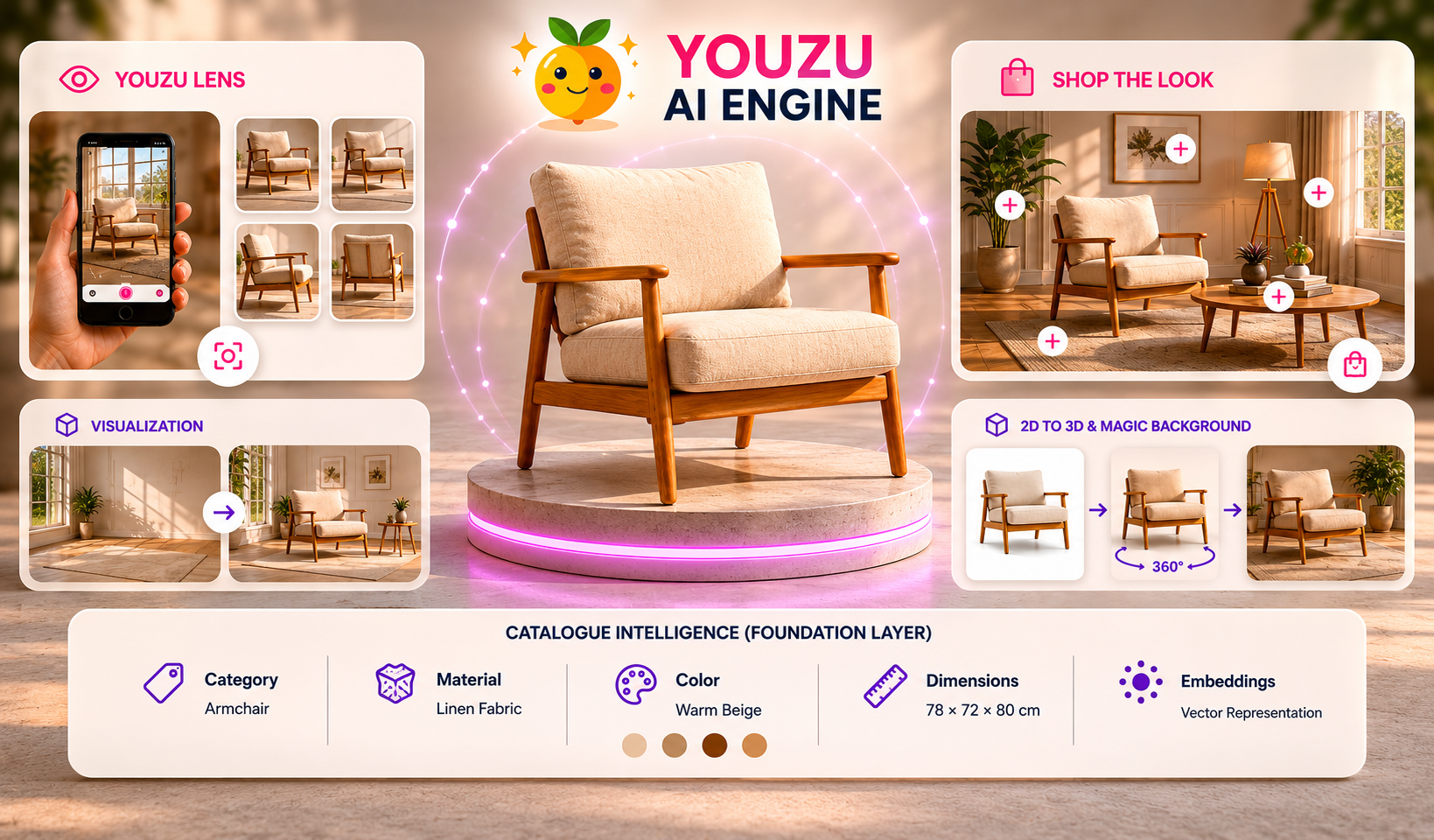
Youzu and Zolak can both help furniture retailers turn a catalogue into interactive room experiences, but they start from different technical and commercial centres. Zolak is a furniture-focused 3D visualization platform. Youzu connects product intelligence to image-led discovery, product-linked scenes, and room-oriented visual commerce. The right choice depends on whether the hardest problem is configurable 3D planning, a reusable product layer, or a combination of both.
The short answer
- Start with Youzu when the priority is turning a changing 2D catalogue into governed product intelligence that can power visual discovery, product alternatives, shoppable scenes, room-oriented experiences, and adjacent catalogue automation without making a 3D asset programme the starting point.
- Evaluate Zolak when configurable furniture, interactive showrooms, room planning, AR, managed 3D assets, and rendering services are the central programme requirements.
- Consider coexistence when high-fidelity configuration or planning needs to sit alongside a connected product layer feeding several commerce surfaces.
What each platform is designed to do
Zolak’s public materials describe more than a simple 3D room viewer. They cover interactive showrooms, a configurable product viewer, multi-product room planning, augmented reality, virtual staging, content-management workflows, and 3D modelling or rendering services. A fair comparison must treat that as meaningful product depth—especially for a retailer whose launch depends on configuration fidelity or a managed 3D asset programme.
Youzu begins with the product and catalogue context behind the scene. Its room-oriented workflow can be evaluated for mapping products into an environment, presenting alternatives, keeping placed products connected to a catalogue selection, and making the result shoppable. The same product understanding can also serve visual discovery, enrichment, variant or offer context, and other customer-facing visual surfaces.
Where Zolak is stronger
Zolak is the stronger starting point when a retailer needs a furniture-specific 3D programme: deep product configuration, interactive showrooms, detailed room planning, AR, modelling, rendering, or an asset-production workflow that must be managed at scale. Those are documented strengths, not evidence gaps. If a buyer’s experience depends on them, it should test Zolak’s asset coverage, configuration logic, spatial fidelity, implementation model, and commercial fit directly.
Where Youzu is differentiated
Youzu’s differentiation is the connection between a governed product layer and several visual-commerce surfaces. A retailer can evaluate whether one product foundation supports visual discovery, product alternatives, shoppable scenes, catalogue enrichment, room interactions, and visual content without treating every scene as an isolated asset project. That is most useful when the retailer’s roadmap spans more than one surface and needs product relationships, availability, variants, and merchandising constraints to travel with the experience.
 Interactive demoOpen Youzu Room IntelligenceExplore the public Youzu property-visualization experience for image and video generation workflows designed around property photos.Open resource
 Do not promise exact fit from one room photo
A convincing room image is not the same as a validated fit decision. Exact fit requires reliable room geometry, product dimensions, placement logic, and an agreed error tolerance. Ask each vendor to document what inputs it requires, how it handles missing dimensions or occlusion, where a human review is needed, and what the shopper should understand about the result before it influences purchase.
Run the same room-and-asset benchmark
Use representative product families and room scenarios rather than a polished hero scene. Include configurable and non-configurable products, products with incomplete dimensions, multiple compatible items, awkward lighting, partial rooms, out-of-stock options, and the room styles or markets the retailer expects to support. Freeze the source assets and acceptance criteria before the vendor work begins.
- Asset and product coverage: which priority products, variants, finishes, and room scenarios can enter the experience without manual reconstruction.
- Product-link accuracy: whether every placed item maps to the correct sellable product or acceptable alternative, with stock and variant controls.
- Configuration and spatial criteria: test dimensional rules, configuration behaviour, placement constraints, and the limits the customer experience must disclose.
- Visual and merchant approval: separate image quality from the merchandising team’s ability to approve, edit, replace, or unpublish a scene.
- Operational economics: account for asset preparation, integrations, publishing workflow, exception handling, and review—not only a generated image.
- Online measurement: after acceptance criteria are met, use a controlled test for the shopper behaviour the programme is meant to change.
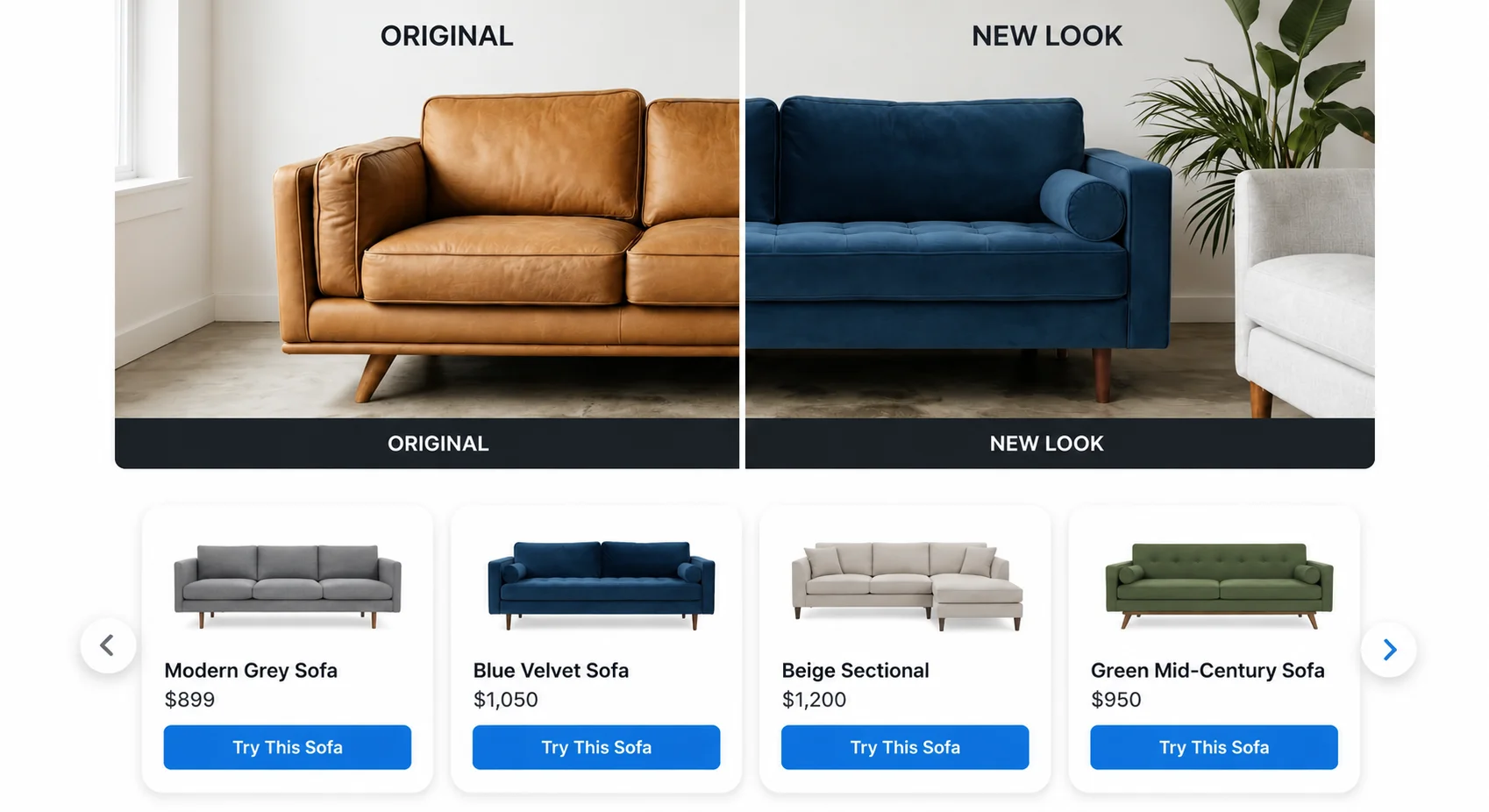 VideoWatch Youzu Swap compare catalogue alternatives in contextSee how a shopper can preview a selected product alternative in an existing room while keeping the decision tied to the available assortment.Open resource
 The decision rule
Do not reduce Zolak to a narrow 3D tool, and do not assume Youzu replaces a configuration or 3D-asset programme. Zolak should lead the shortlist when detailed furniture configuration, planning, AR, showrooms, and managed 3D workflows are the central job. Youzu should be evaluated when the retailer wants a reusable product-intelligence layer behind shoppable visual experiences. If both jobs matter, coexistence may be more practical than a forced replacement—and the benchmark should determine the boundaries.