Youzu vs Hypotenuse AI: Which AI Product Data Platform Fits Your Catalogue?
An objective guide to choosing between Hypotenuse AI’s broad AI-native PXM/PIM and content workspace and Youzu’s catalogue decision layer for taxonomy, product entities, offers, duplicates, and policy workflow.

In this article
The decision between Youzu and Hypotenuse AI is not a choice between automation and manual catalogue work. Both put AI inside ecommerce product-data workflows. The useful comparison is whether the team needs a unified AI-native PXM/PIM and content workspace, or an AI engine that can automate catalogue enrichment, resolve product relationships, and apply company policies before approved records move downstream.
The short answer
- Start with Youzu when the operation needs an AI engine to automate catalogue enrichment, build product, family, variant, multiple-offer, and duplicate relationships, and apply company policies that approve, soft reject, hard reject, or route records to review before they reach commerce experiences.
- Evaluate Hypotenuse AI when the primary requirement is a unified AI-native PXM/PIM and content workspace for product-information operations, localization, image preparation, channel readiness, and connected activation.
- Benchmark both when the evaluation spans enrichment, content, entity resolution, policy automation, and the system of record. Use the same representative catalogue data and agree accepted outputs before either workflow is tuned.
What Hypotenuse AI is built to do
Hypotenuse AI publicly positions itself as an AI-first product-information platform. Its current ecommerce materials describe attribute enrichment from product images, web sources, supplier data, and specification sheets; taxonomy and categorisation; product information management; SEO/GEO content; image editing; review workflows; integrations; and support for large catalogues. That is materially broader than AI copywriting, and a fair comparison should acknowledge it.
For a team that wants one workspace for product data, descriptions, localization, image preparation, brand or channel formatting, and activation into connected systems, that broader PXM/PIM and content surface can be the more natural starting point. The relevant procurement work is then to confirm the modules, integrations, operating model, and acceptance criteria the team actually needs.
What Youzu can automate from the same catalogue inputs
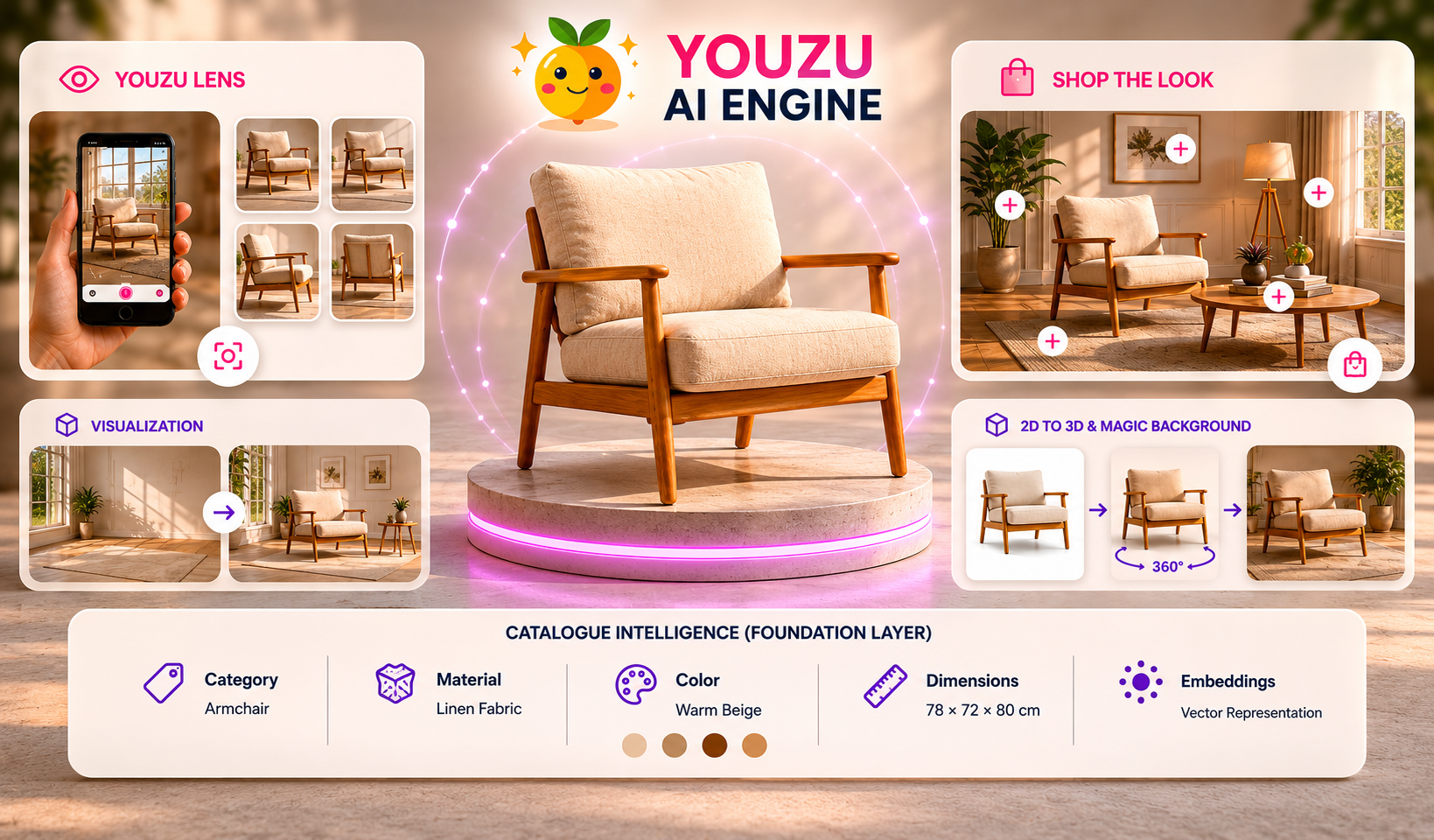
Youzu automates catalogue enrichment from product data and imagery: it can propose category and required attributes, normalise product content, and turn incoming listings into a usable product structure. The workflow is not limited to filling fields. It can create product, family, variant, multiple-offer, and duplicate relationships, while retaining evidence and a review state for the decisions an operator needs to inspect.
Youzu can also apply a company’s own policies to the enriched record and its images. A policy workflow can approve a listing, issue a soft reject, hard reject it, or send it to review with reason-coded signals. That combines enrichment, entity resolution, and auto-moderation in one operating flow rather than treating them as unrelated handoffs.
A buyer should still assess system-of-record needs—authoring, roles, workflow, versioning, supplier collaboration, localization, and activation—in their own right. The architectural question is whether Youzu should supply the product intelligence and automation that improves those systems, or whether a unified PXM/PIM workspace is the primary operating environment.
Where Hypotenuse AI is stronger
Hypotenuse AI is a strong fit when the primary requirement is a unified AI-native PXM/PIM and content workspace: one environment for product-information operations, editorial content, localization, image preparation, channel readiness, and connected activation. Those workflow and system-of-record needs are legitimate reasons to evaluate Hypotenuse directly. They should not be confused with a claim that Youzu lacks enrichment, automation, entity resolution, or policy-driven moderation.
The catalogue decision a content demo does not answer
Consider several seller rows for the same running shoe. An enrichment tool may make each row look more complete: clearer material, colour, size, copy, and channel formatting. The marketplace still has to decide whether those rows are one product family, several colour or size variants, duplicate product records, or seller-specific offers attached to an existing variant. If that identity decision is wrong, polished content can still leave fragmented reviews, broken comparisons, and duplicate product pages.
That is where Youzu deserves the benchmark. The question is not whether a vendor mentions variants in a feature list. It is whether, on labelled multi-seller data, the system creates the accepted product, variant, offer, and duplicate graph—with evidence and an operable review queue. The same rule applies to catalogue policy: a buyer should test the required hard-reject, soft-reject, approval, and review states against the company’s own commerce rules.
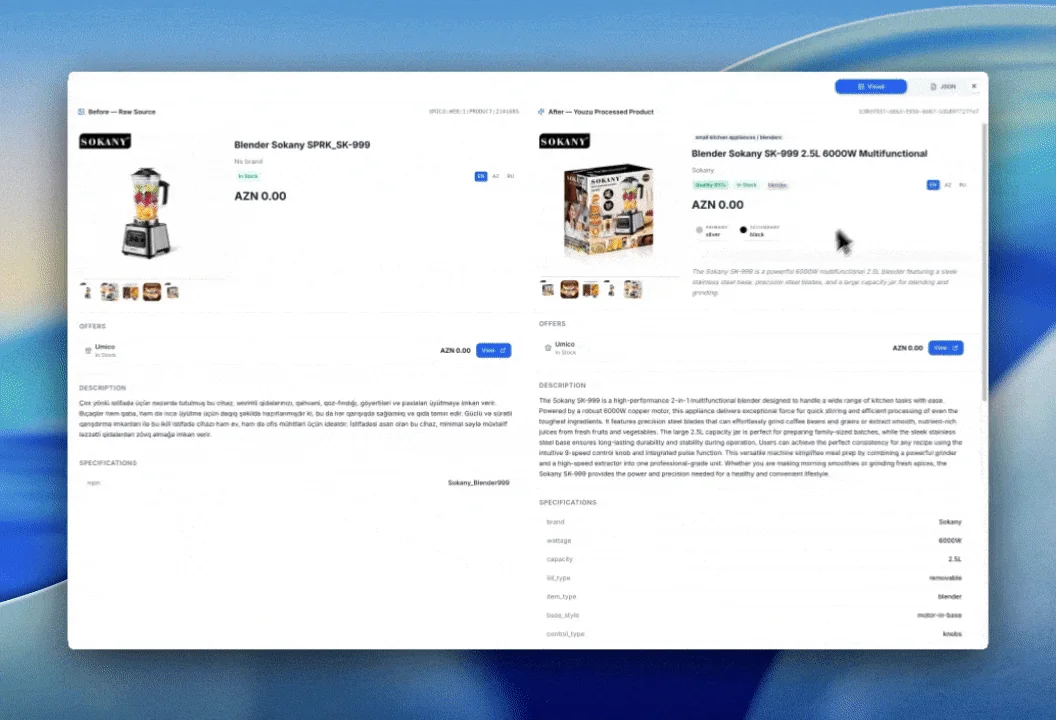 BenchmarkRun a catalogue automation benchmarkEvaluate enrichment, automation, product variants, duplicate handling, and multiple-offer structures against agreed criteria.Open resource
 Run a benchmark on the work that creates review queues
Do not evaluate on the cleanest product file. Use a representative sample that contains missing or contradictory attributes, images with useful product evidence, near duplicates, multi-item variant families, several sellers or locations offering the same product, multilingual fields, category ambiguity, and listing-policy edge cases. Freeze the sample and the accepted labels before either vendor tunes the workflow.
- Attribute precision and recall by critical field: evaluate required fields against the retailer’s accepted evidence and taxonomy.
- Taxonomy correctness: measure whether each product maps into the category structure the operation actually runs.
- Product-family, variant, offer, and duplicate decisions: separate relationship accuracy from content completeness.
- Evidence coverage: check whether the reviewer can understand why the system proposed the category, attribute, relationship, or policy outcome.
- Human review and overrides: count the cases operators must inspect, correct, reject, or route onward before publication.
- Time and total cost per accepted item: include processing, integration, exception handling, and review—not only the volume of generated content.
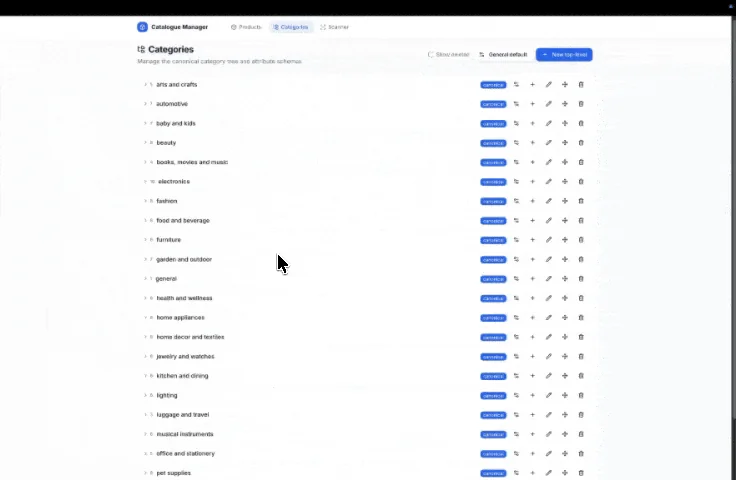
 Product overviewExplore policy-driven auto-moderationReview company-policy decisions, including approval, soft reject, hard reject, and review states with reason-coded signals.Open resource
 A practical coexistence architecture
A retailer does not have to begin with a forced replacement decision. Hypotenuse AI can fit a team that wants a unified PXM/PIM and content workspace. Youzu can automate enrichment, product and offer structures, duplicate handling, and policy decisions as an operating layer in its own right—or improve the records that flow into an existing PIM/PXM and connected systems. The architecture should follow the workflows the team needs to run, not a claim that one capability belongs to only one platform.
The decision rule
Ask which workflow produces the accepted catalogue output the operation needs: enriched records, correct product-family and variant relationships, multiple offers attached to the right product, controlled duplicate handling, and company-policy outcomes that can be published or reviewed. Hypotenuse AI belongs on the shortlist when a unified PXM/PIM and content workspace is the central requirement. Youzu belongs on the shortlist when catalogue automation, entity structure, and policy-driven operations are central—or when those capabilities need to improve the systems already in place. Run the same representative data through each viable workflow and let the accepted output decide.