The Cold-Start Problem in Fashion and Furniture Recommendations
New and long-tail products do not arrive with click history. A useful recommendation strategy needs a product understanding that exists before behavior does.
In this article
A new product can be ready to sell and still be invisible to a recommendation system. It has no purchase history, few views, and no long trail of behavioral signals. For fashion and furniture teams, that delay is especially awkward: the product may be a new collection, a seasonal arrival, or a long-tail item whose value is clear to a merchandiser long before it is clear in click data.
Behavioral recommendations remain useful where a product already has traffic. The cold-start gap is different. The first question is not who clicked an item. It is what the item is, how it looks, what it is compatible with, and which existing products give a shopper a credible next step.
Clicks describe history. Product signals describe the arrival.
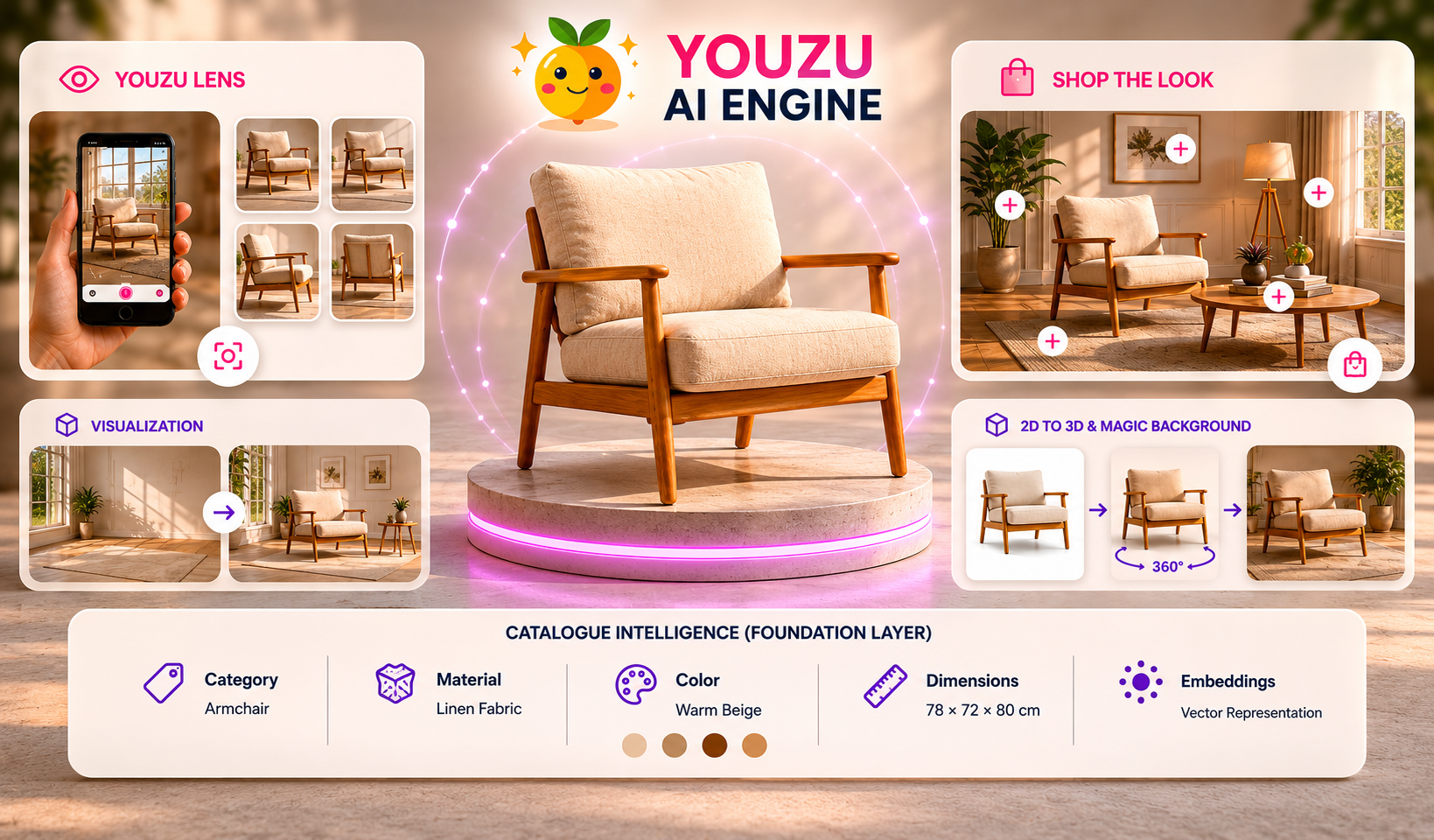
A fashion product can carry signals such as silhouette, palette, material, pattern, texture, fit, and style. A furniture product can carry material, color, form, room context, and compatibility. Those signals should be connected to the actual record, alongside the category, availability, and commercial constraints a team already operates.
That does not make every new item an automatic recommendation. It gives a retailer something concrete to evaluate before behavior accumulates: a representation built from product text, images, and accepted attributes rather than a blank space in the catalog.
Similarity and compatibility are not the same decision
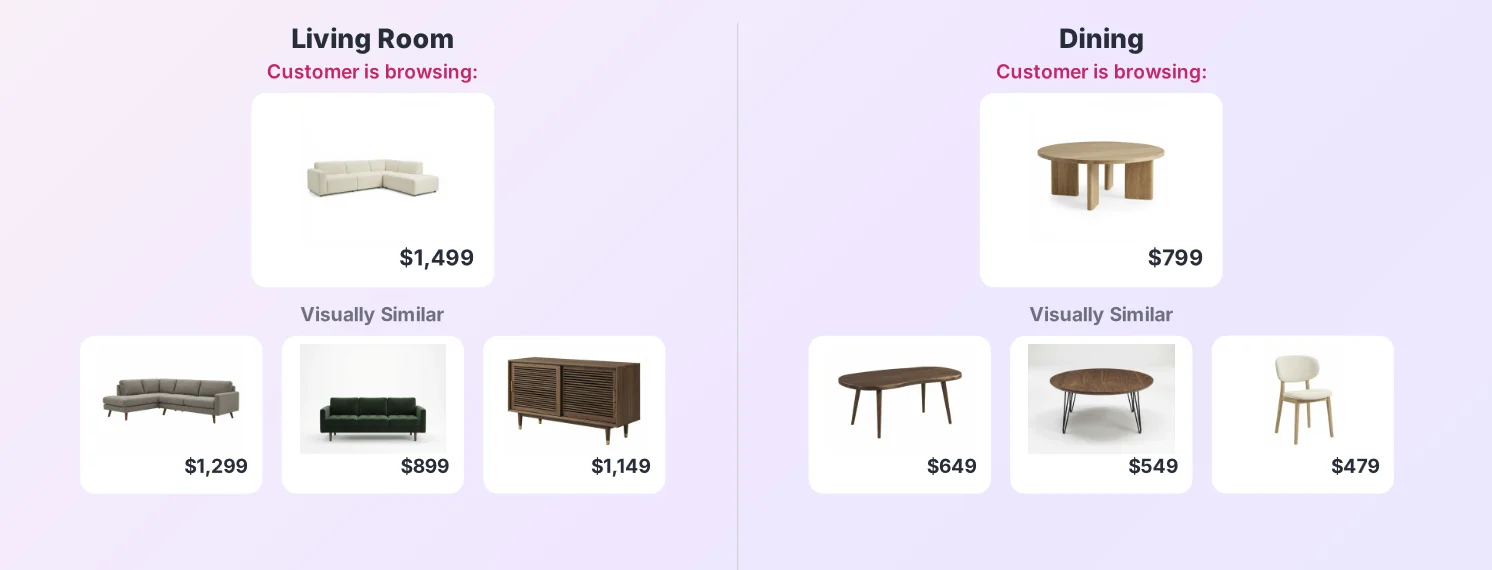
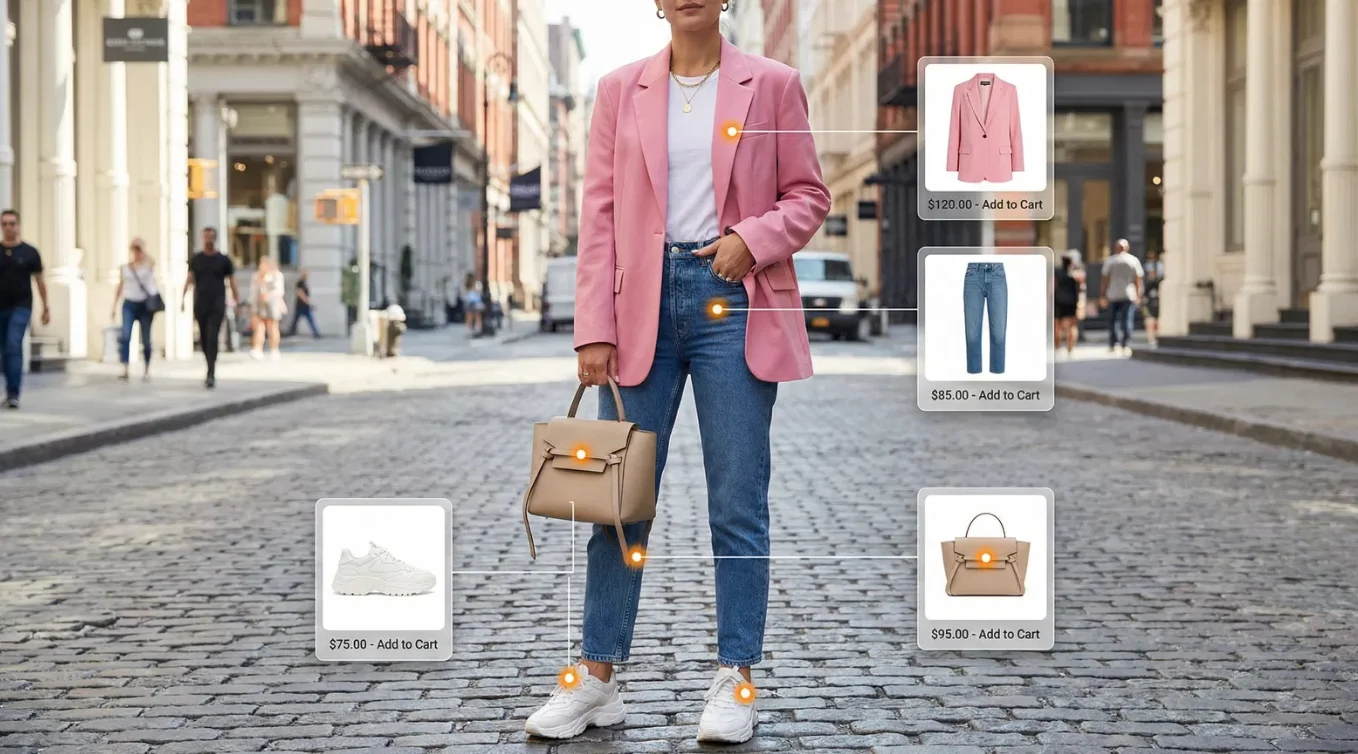
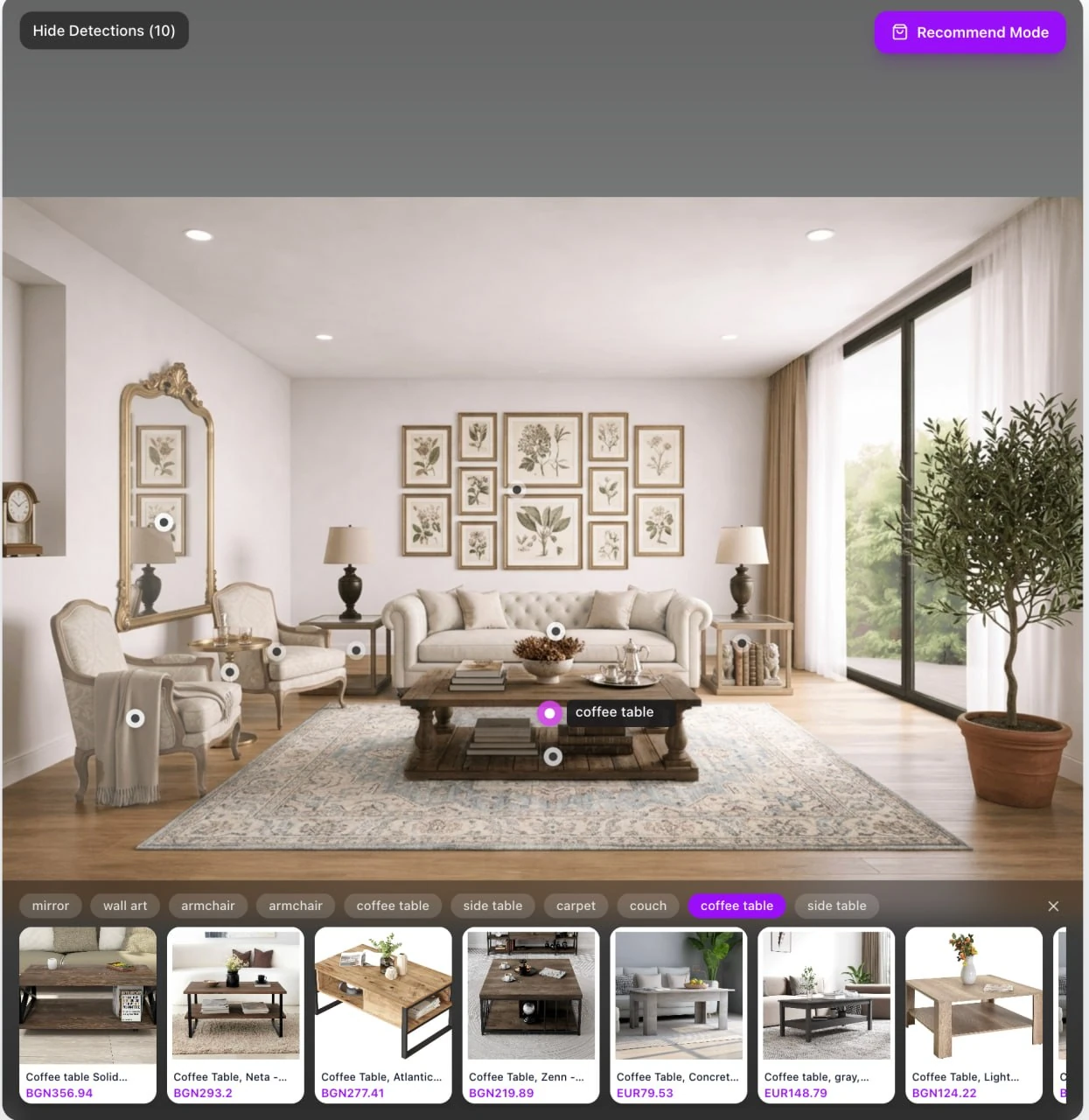
A similar item helps a shopper continue an existing preference: another sofa with a related form, or another jacket with a related silhouette. A compatible item answers a different question: what can work with the product already in view? A recommendation approach should keep those jobs distinct and apply the business rules that matter for the category, market, availability, and merchandising plan.
That distinction also keeps the recommendation surface honest. It should not return a visually interesting item that is unavailable, outside the relevant category, or inconsistent with the context a shopper is exploring. Product understanding is useful only when it remains connected to the catalog decisions behind the surface.
Give merchandising one collection to judge
The practical test is smaller than a broad recommendation replacement. Choose one fashion collection, furniture category, or long-tail assortment. Define the candidate products, the constraints that matter, and the difference between a useful similar item and a useful compatible one. Let merchandisers review the outputs before treating the method as ready for a live surface.
The evaluation should separate product relevance from business fit. Review whether the result is visually and structurally credible, whether it respects availability and category rules, and whether the team would actually place it in the journey. Only then does a controlled online comparison have a meaningful baseline.
The catalog should help new products earn their first discovery
Cold start is not solved by waiting for more clicks. It is managed by making new products understandable at arrival: what they are, what they look like, what they relate to, and where they should be considered. That gives search, recommendations, and merchandising a shared starting point while leaving the retailer in control of which results become customer-facing.
VideoSee the Youzu Lens visual-search architectureA technical walkthrough of matching product imagery to catalog candidates and applying the constraints around a discovery result.Open resource VideoWatch a Shop the Look workflowSee how several visual elements in an inspiration image can be connected back to catalog products for discovery.Open resource Start with the products that have not earned a click yet
A useful first conversation is not about replacing every recommender. It is about the collection that is new, important, or persistently underrepresented because behavior has not caught up. Use the same product and visual signals your catalog team can review, agree the candidate and constraint rules, and compare the result against the way the current surface handles those products today.