Variants Are Entity Resolution, Not a Title-Matching Task
A product family, a purchasable variant, and a seller offer are different records. Treating them as the same is how marketplace catalogs create costly confusion.
In this article
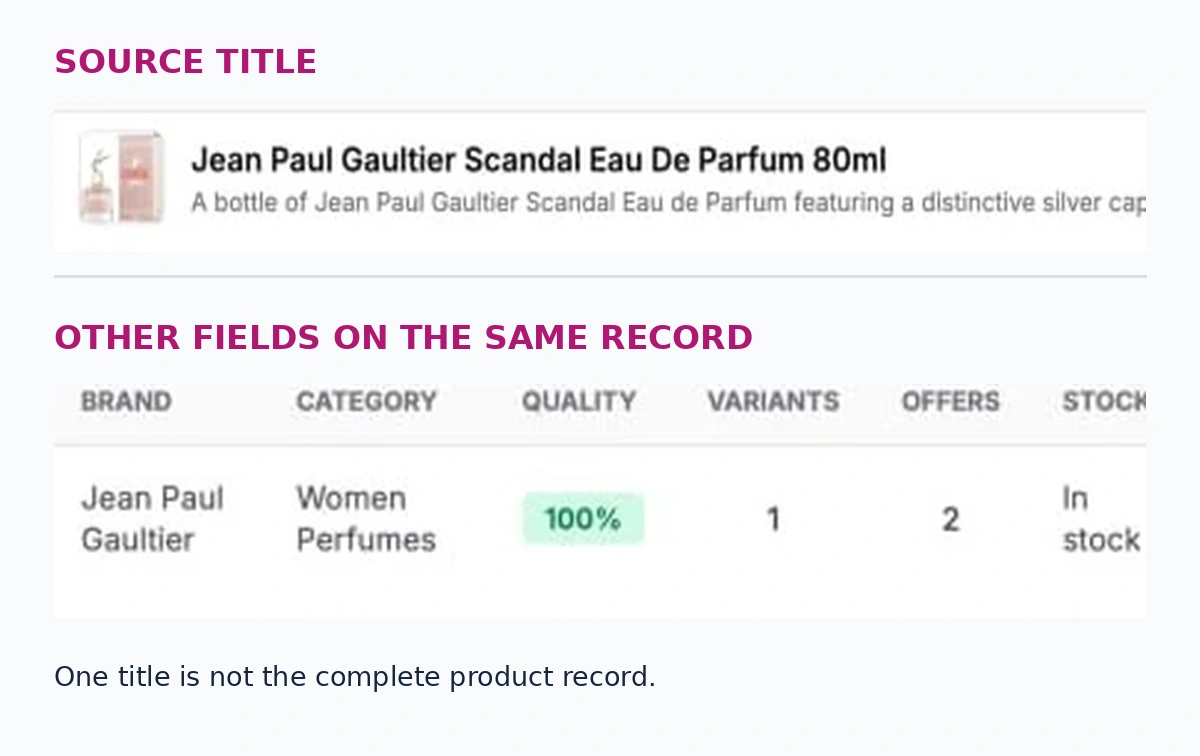
A product title is a clue, not an identity. In a marketplace feed, two records can have nearly identical names and represent different colors, sizes, conditions, sellers, or commercial offers. Two products can also be the same family even when their source titles use different words. That makes variant work an entity-resolution problem—not a string-cleanup exercise.
The distinction matters wherever an operator needs to decide what shoppers see, what a search index receives, or what a seller can change. If the underlying records are mixed together, a catalog can hide a legitimate variation, merge the wrong items, or make a channel-specific offer look like the product itself.
Start with the three records that do different jobs
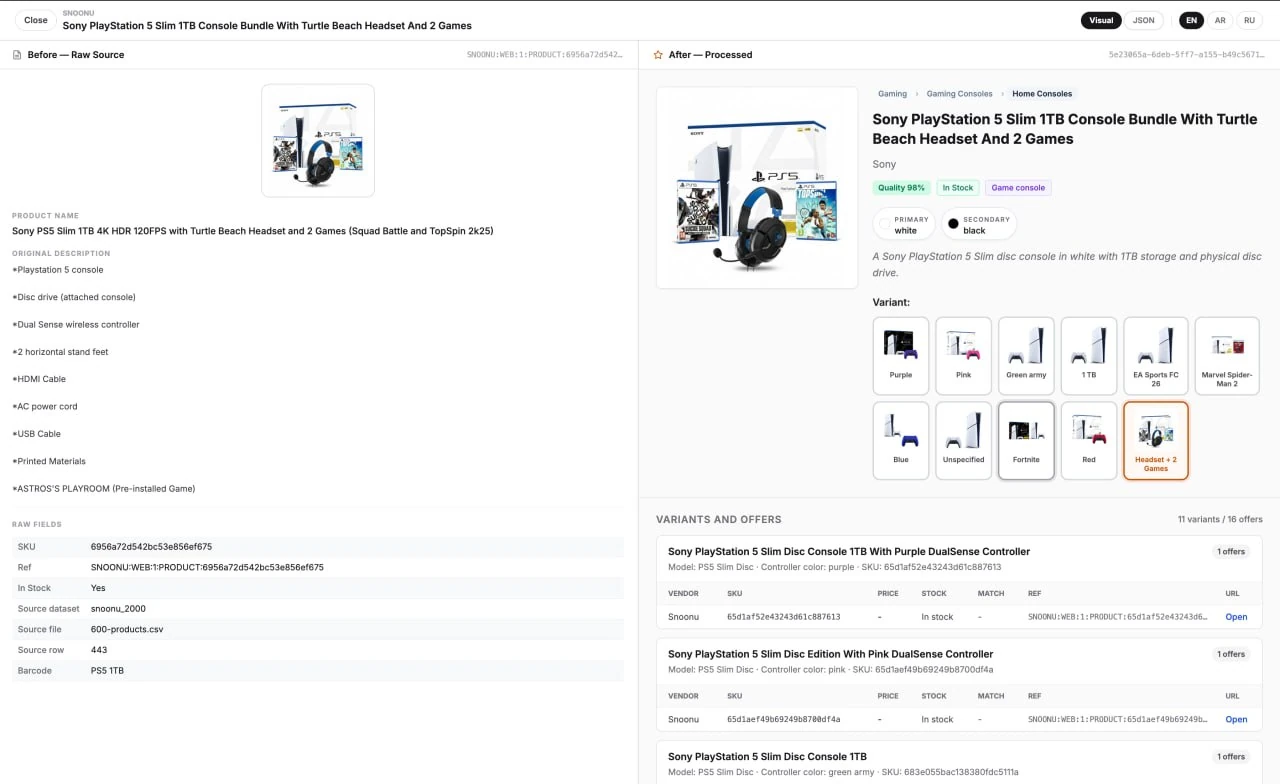
A product family is the commercial concept shared across related items: a model, a brand, a category, and its shared attributes. A variant is a purchasable version of that family, such as a color, size, material, finish, or SKU. A seller offer is the channel-specific representation: its seller, price, stock, condition, location, and policy state.
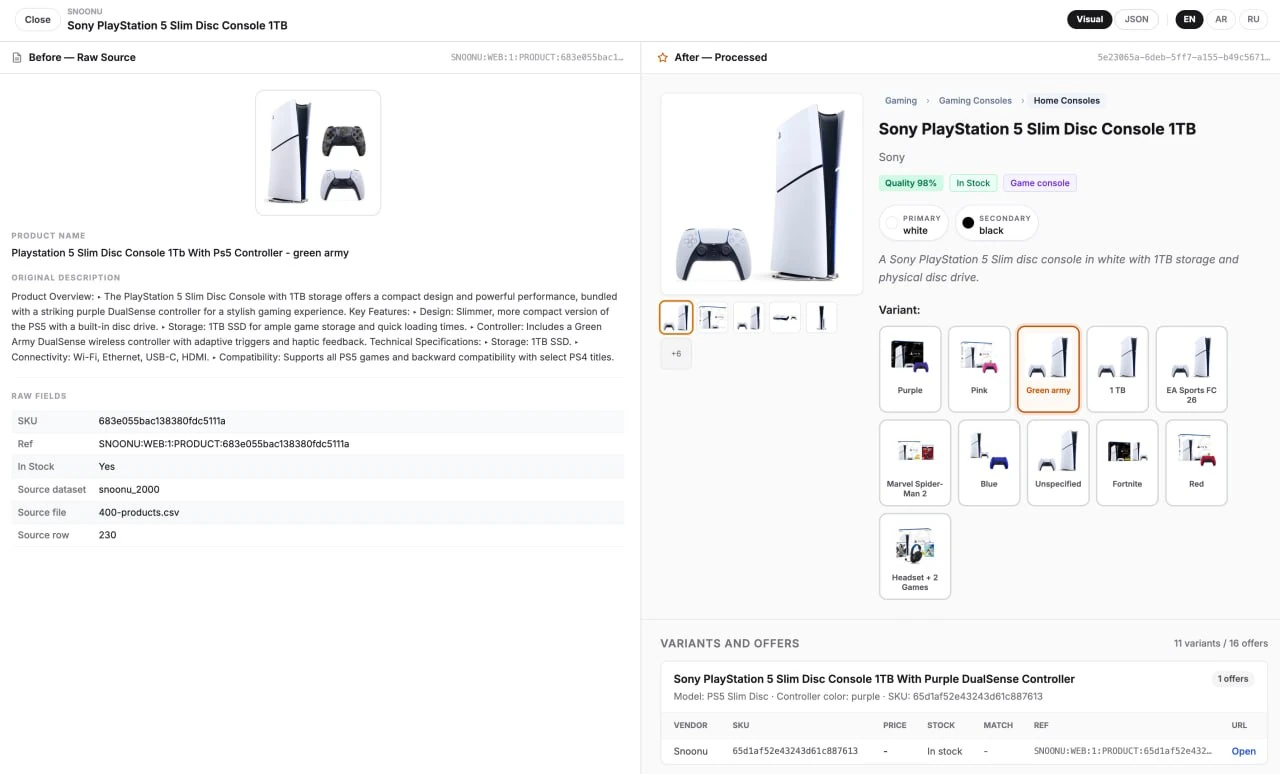
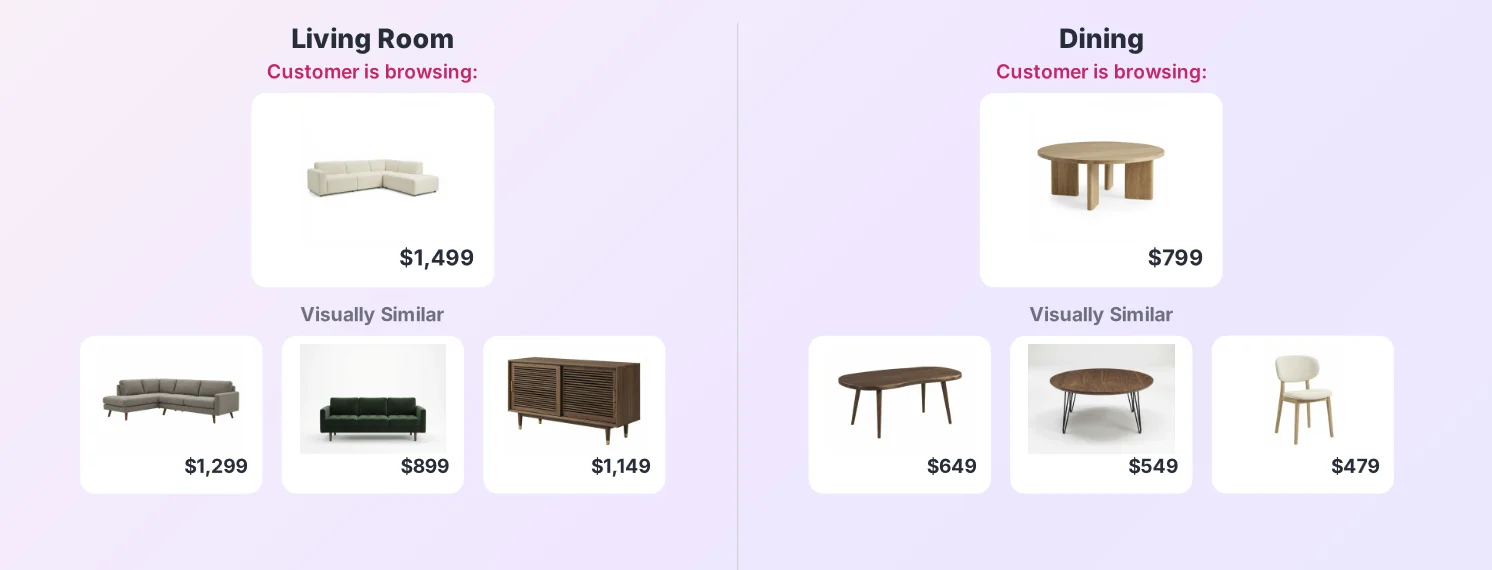
That model leaves room for the reality of commerce. A sofa family can have several fabric or color variants. Each variant can appear through several seller offers. A retailer can still retain the relationships it needs for availability, policy, taxonomy, merchandising, and downstream delivery without asking one title field to carry every meaning.
Why title matching creates the wrong kind of confidence
Titles are inconsistent by nature. One feed may lead with a brand, another with a color, and another with a seller’s shorthand. Images and structured attributes can add useful signals, but no single signal should silently decide a risky merge. The operational question is not whether two titles look alike. It is whether the proposed relationship preserves the product, variant, and offer identities the business needs.
A good variant workflow therefore produces a candidate family, the dimensions that appear to differ, supporting evidence, and a confidence signal. It gives the team a way to accept a clear relationship, review an ambiguous one, or leave records separate when the evidence conflicts.
Make the review boundary explicit
Not every decision carries the same risk. A clear, low-risk attribute normalization can follow a different path from a possible variant merge. For higher-risk relationships, the right default is evidence, an explicit threshold, and a route to review or source remediation—not automatic certainty.
- What is the shared product family? Define the concept that actually belongs together before grouping its purchasable forms.
- Which dimensions genuinely differ? Keep color, size, material, finish, and other variation visible rather than flattening them into a title.
- Which record owns the commercial facts? Seller, price, stock, condition, and policy state belong to an offer, not to the family definition.
Return an accepted relationship to the stack
Once a relationship is accepted, it can feed the system that already owns the next step: a PIM, marketplace workflow, search index, feed, or commerce platform. The purpose is not to replace every existing system. It is to give those systems a relationship model that is more useful than a loosely matched title and less destructive than a blind merge.
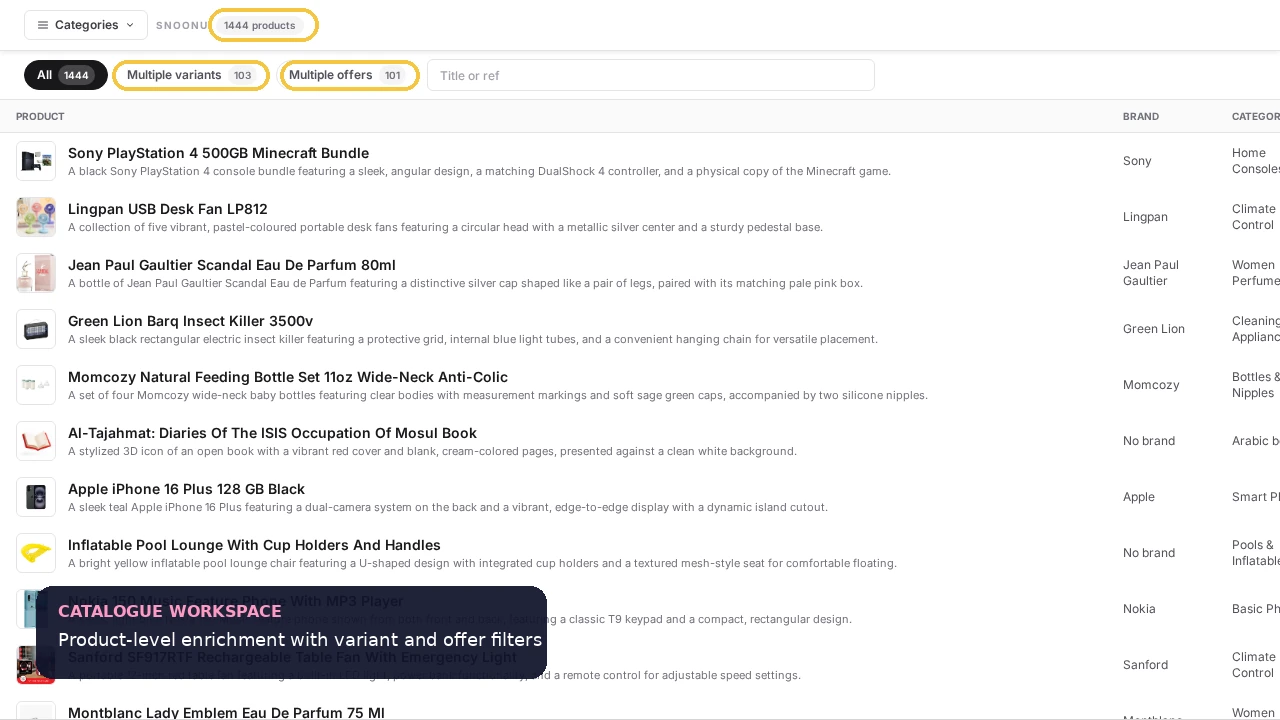 Interactive demoInspect a Catalog Intelligence workspaceExplore a first-party sample workspace with product records and filters for variants and offers, then view the record context that makes relationships reviewable.Open resource
 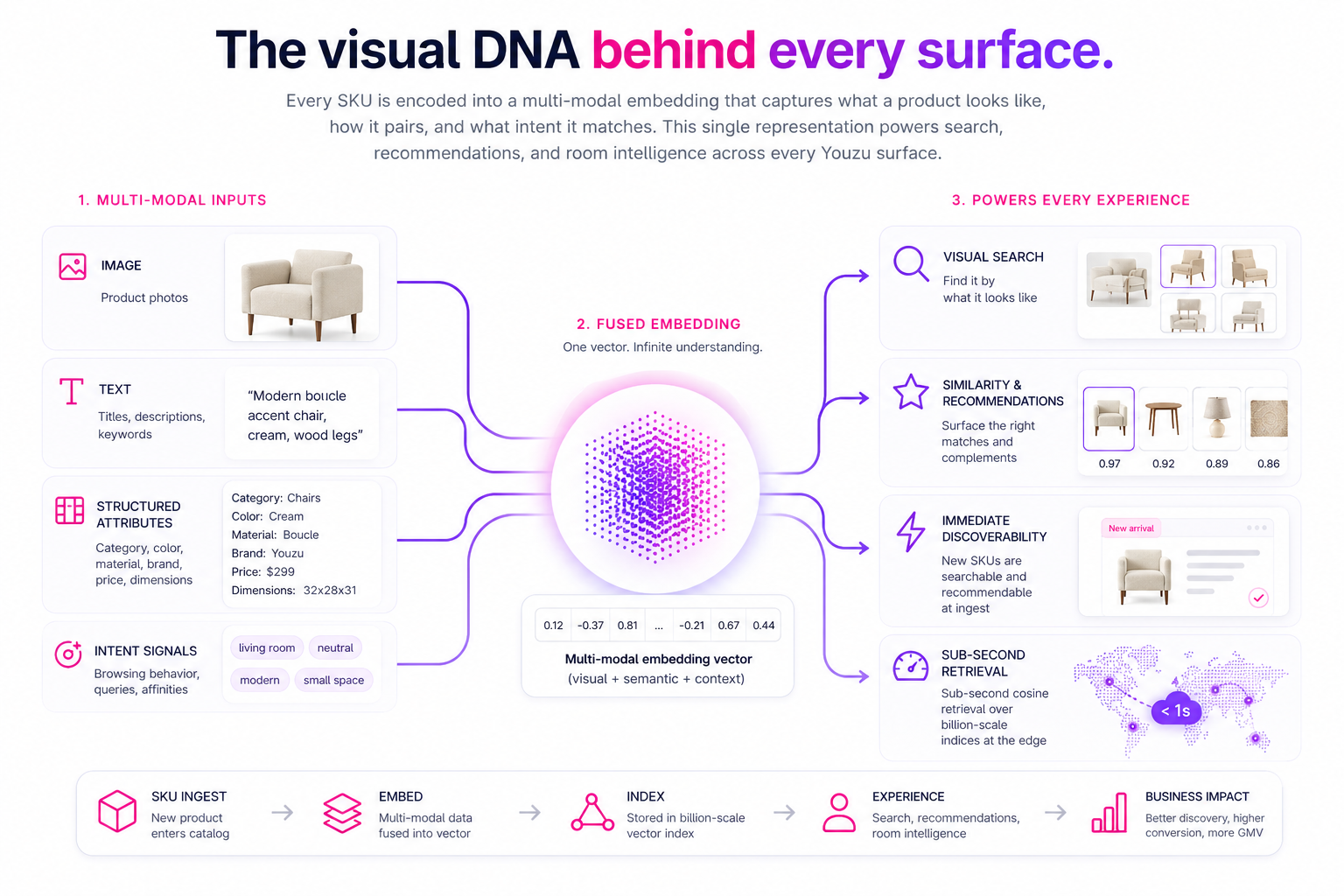 VideoWatch the Youzu platform walkthroughSee how catalog operations, visual discovery, and other downstream surfaces can work from structured product intelligence.Open resource
 Test the relationships that make your catalog risky
The useful starting point is a category where product families, variants, and offers are currently hard to separate. Compare proposed groups against the relationships your team trusts today, identify the false merge that would cause the most damage, and agree who reviews the difficult cases. That turns variant resolution into a controlled catalog workflow rather than a cleanup rule that quietly changes what customers can buy.